The short answer
For an air conditioner only: clear leaves and debris, switch the power off at the outdoor disconnect, and if you use a cover, choose a breathable one that covers only the top. Disconnect garden hoses and close the indoor valves to outdoor faucets.
Do not cover or shut off a heat pump. It heats your home in winter and needs free airflow all season.
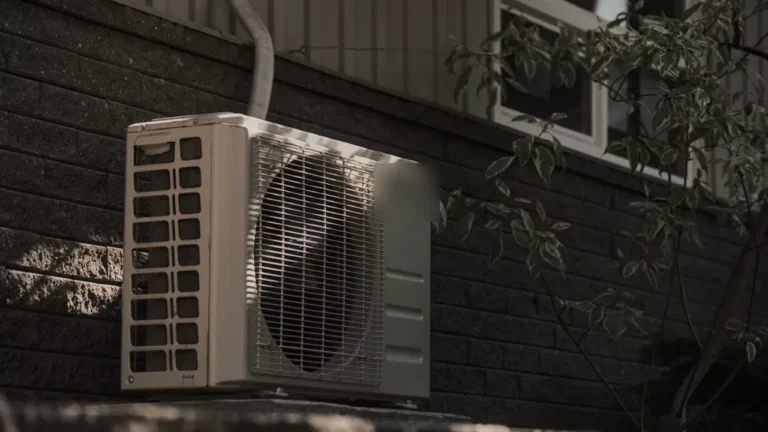
First: is it an AC or a heat pump?
A central air conditioner and a heat pump look almost the same outside. The difference matters: a heat pump runs all winter to heat the house.
- If the outdoor unit runs when the heat is on, it is a heat pump.
- If your thermostat has “Em heat”, “Aux heat” or “Emergency” settings, it is very likely a heat pump.
- The label on the outdoor unit usually names the type; the model number can be looked up with the maker.
Have a heat pump? Skip the cover and the power shutoff, and follow our heat pump maintenance guide instead.
Clear debris from the outdoor unit
Fall leaves, seeds and grass clippings collect in and around the outdoor condenser. The DOE notes that outdoor coils can get very dirty in dusty areas or where there is foliage nearby.
- Pick leaves and twigs out of the top grille and from around the base by hand.
- Trim shrubs back so air can move freely in spring; keep about two feet clear on every side.
- With the power off, you can rinse the fins gently with a garden hose. Skip pressure washers and stiff brushes – the fins bend easily.
Turn off power at the disconnect (AC only)
Next to the outdoor unit is a disconnect box with a pull-out block, switch or breaker. Turning it off for winter keeps the AC from starting on a warm spell or by mistake when the outdoor air is too cold for cooling.
One caution: some air conditioners have a crankcase heater that keeps the compressor oil warm while the unit has power. Check your owner’s manual. Some makers ask you to restore power well ahead of the first cooling day so the heater can warm the compressor before it starts. When in doubt, leave the power on and simply keep the thermostat off cooling.
To cover or not to cover
Outdoor units are built to sit outside in rain and snow, so a cover is optional. Opinions differ, and both sides have a point:
- A top-only cover – a breathable panel or mesh over the top grille – keeps leaves, seeds and ice from falling in while leaving the sides open so moisture can escape.
- A full wrap that seals the sides can trap moisture and condensation inside, which can encourage rust and corrosion, and gives mice and other animals a sheltered place to nest and chew wiring.
The safe rule: follow the maker’s guidance for your model. If you use a cover, make it breathable, top-only, and secured so it cannot blow off. Remove it before the system runs again. Never cover a heat pump.
Snow, ice and roof drips
- Brush heavy snow off the top with a broom after storms. Do not chip ice with a shovel or other tool – a punctured coil means a refrigerant leak.
- Keep gutters above the unit clear so water does not drip and freeze on it.
- Do not pile shoveled or plowed snow against the unit.
Refrigerant lines and wiring
Look at the two copper lines that run from the outdoor unit into the house. The larger one should have foam insulation; if it is cracked or missing, ask about replacing it at the spring service. Check that the wiring conduit is attached and that no animals have nested around the base. Do not open the electrical panels on the unit.
Outdoor faucets and hoses
While you are outside, deal with the water lines. The American Red Cross advises removing, draining and storing outdoor hoses, and closing the inside valves that supply outdoor hose bibs. Drain pool and sprinkler supply lines following the maker’s or installer’s directions. More in our guide on how to prevent frozen pipes.
Spring start-up
Before the first warm day: remove any cover, clear debris, restore power at the disconnect (following any wait time in your manual), and test cooling on a mild day. Our AC maintenance checklist covers the rest, and the HVAC maintenance checklist lays out the year.
Sources
- U.S. Department of Energy, Energy Saver: Maintaining Your Air Conditioner (checked October 2026)
- American Red Cross: Preventing & Thawing Frozen Pipes (checked October 2026)
Find an HVAC company near you
Local heating and cooling companies by metro area, listed A to Z with phone numbers, services and emergency options.
Questions
Should I cover my AC unit in the winter?
It is optional. A breathable, top-only cover can keep leaves and ice out of the top. Avoid full wraps that trap moisture and invite rodents. Follow the maker’s guidance, and never cover a heat pump.
Should I turn off my AC at the breaker in winter?
Many homeowners switch an AC-only unit off at the outdoor disconnect so it cannot start in cold weather. Check your manual first: some units have a crankcase heater, and makers may ask you to restore power ahead of time before using the AC in spring.
Do I need to winterize a heat pump?
No. A heat pump heats your home in winter, so leave it powered and uncovered. Keep snow, ice and debris clear of it instead.
Can I use a tarp to cover my outdoor AC unit?
A tarp wrapped around the sides can trap moisture and give animals a place to nest. If you cover the unit, use a breathable cover over the top only, and remove it before running the system.
Related guides
Updated October 2026 by the Heating and Cooling editorial team. General information for homeowners, not professional advice – rules and equipment differ. When gas, carbon monoxide, electricity or anyone’s safety is involved, call 911 or your utility. How we write our guides · HVAC glossary