Home/Guides/AC maintenance: a spring checklist for homeowners
Guide
AC maintenance: a spring checklist for homeowners
A central air conditioner needs a little attention before the first hot week. Most of it is cleaning and clearing you can do yourself in an afternoon; refrigerant and electrical work belongs to a technician.
The short answer
Before cooling season, change or clean the filter, clear about two feet around the outdoor unit, rinse its fins with the power off, make sure the condensate drain flows, and look at the insulation on the refrigerant lines. Then book a professional check: ENERGY STAR advises checking the cooling system every spring.
Before you start: power off
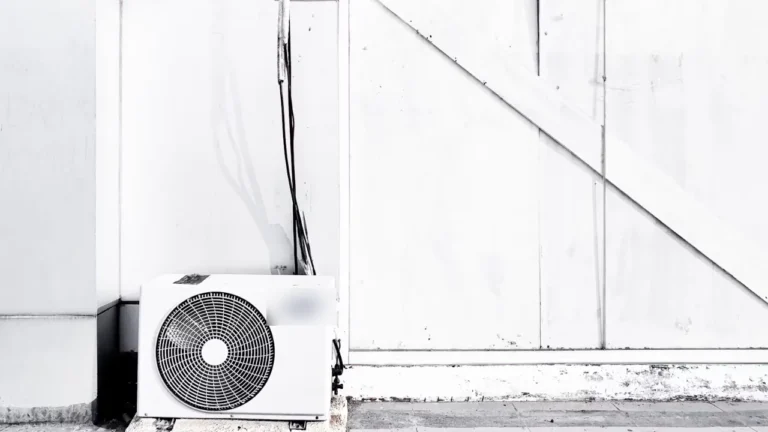
The outdoor unit, called the condenser, has a disconnect box on the wall nearby. Set the thermostat to Off, then switch off or pull the disconnect before you clean anything outside. Do not open the unit’s electrical panel: the capacitor inside can hold a dangerous charge even with the power off. Refrigerant work is legally limited to technicians with EPA Section 608 certification.
Start with the filter
The Department of Energy recommends cleaning or replacing AC filters every month or two in cooling season, and says swapping a dirty, clogged filter for a clean one can lower an air conditioner’s energy use by 5% to 15%. Start the season with a fresh one. Our air filter guide covers sizes, the arrow and MERV.
Clear around the outdoor unit
The outdoor unit pulls air in through its sides and pushes it out the fan on its lid. Keep about two feet clear on every side.
- Rake out leaves, grass clippings, seed fluff and anything blown against the fins.
- Trim shrubs and vines back. The Department of Energy notes outdoor coils can get very dirty in dusty places or with plants nearby.
- Do not store anything on the lid, and do not cover the unit while it might run.
- Aim the mower so clippings blow away from it.
Rinse the condenser fins
With the power off, spray the fins gently with a garden hose to wash out dust and debris. Work from the inside out if you can reach without taking the unit apart; otherwise rinse from the outside, working from the lid downward. Never use a pressure washer, which flattens the fins. If you use a coil cleaner, choose one labeled for outdoor AC coils and follow its directions.
The indoor evaporator coil matters too. The Department of Energy says to check it every year and clean it as needed. It sits inside a sealed cabinet on most systems, so leave it to the technician.
Straighten bent fins, gently
Bent aluminum fins block airflow through the coil. A fin comb, a small hand tool that matches the spacing of the fins, can comb minor bends back into line. Work slowly with light pressure, and do not push into the copper tubing behind the fins. Large crushed patches, or fins that crumble, are a job for a technician.
Clear the condensate drain
Your AC pulls water out of the air and sends it down a condensate drain. The Department of Energy suggests occasionally passing a stiff wire through the unit’s drain channels, and warns that clogged channels stop the unit from reducing humidity. The EPA adds: keep drip pans clean and drain lines flowing.
- Find where the drain ends – often outside near the foundation, at a floor drain, or at a small condensate pump – and check it drips when cooling runs.
- Many systems have a float switch that shuts cooling off if the pan fills. If cooling stops and the pan holds water, the drain is the first suspect.
- Follow the maker’s guidance before pouring anything into the line.
Check the refrigerant line insulation
Two copper pipes, the line set, run between the outdoor unit and the indoor coil. The larger one should be wrapped in foam insulation. If that foam is cracked, missing or crumbling from the sun, the cold line sweats and loses some cooling before it reaches the house. Replacement foam pipe insulation sized for the line slips on easily. Do not bend or kink the pipes. An oily patch at a fitting can point to a refrigerant leak – call a technician.
What the professional checks
ENERGY STAR advises a pre-season check-up of the cooling system each spring, and its checklist includes inspecting the condensate drain. The Department of Energy says a well-trained technician will find and fix problems such as:
- the refrigerant charge, and any leaks;
- airflow through the indoor coil;
- duct leaks that need sealing;
- controls, motors and electrical connections;
- thermostat operation.
Ask for a written list of what was checked and measured. If the visit turns up a recommendation to replace something, get it in writing and take time to compare – see repair or replace.
Test early, and when to call
Run the AC on a mild spring day, before the first heat wave, so any problem shows up while companies have openings. Stop and call if:
- the outdoor unit hums but the fan does not spin, or it will not start;
- a breaker trips again after one reset;
- ice forms on the pipes or the unit;
- water leaks onto a floor or ceiling;
- you hear grinding or screeching, or smell burning.
Our AC not cooling guide walks through each of these.
Sources
- ENERGY STAR: HVAC Maintenance Checklist (checked October 2026)
- U.S. Department of Energy, Energy Saver: Maintaining Your Air Conditioner (checked October 2026)
- U.S. EPA: A Brief Guide to Mold, Moisture, and Your Home (checked October 2026)
Find an HVAC company near you
Local heating and cooling companies by metro area, listed A to Z with phone numbers, services and emergency options.
Questions
How often should an air conditioner be serviced?
Once a year, before cooling season. ENERGY STAR advises checking the cooling system each spring. A heat pump also heats, so it is worth checking in fall as well.
Can I clean my AC unit myself?
You can clear around the outdoor unit and rinse its fins with a hose once the power is off. The indoor coil, refrigerant and electrical parts are a technician’s job.
How do I unclog my AC drain line?
The Department of Energy suggests passing a stiff wire through the drain channels. Follow the maker’s guidance for flushing the line. If water is reaching a ceiling or floor, turn the system off and call.
Does my AC need refrigerant added every year?
No. An air conditioner does not use refrigerant up. If it is low, it is leaking, and the leak should be found and repaired.
Related guides
Updated October 2026 by the Heating and Cooling editorial team. General information for homeowners, not professional advice – rules and equipment differ. When gas, carbon monoxide, electricity or anyone’s safety is involved, call 911 or your utility. How we write our guides · HVAC glossary