The short answer
Check the thermostat is on Cool and set below room temperature, replace a dirty filter, and make sure both breakers (indoor and outdoor) are on. If you see ice, turn cooling off and let it thaw. If the outdoor unit hums but its fan does not spin, or the system keeps tripping the breaker, call a company.
1. The thermostat
Make sure it is set to Cool, not Heat or Off, and that the set temperature is a few degrees below the room. If the screen is blank or dim, replace the batteries. Set the fan to Auto: on “On” the fan runs nonstop and blows room-temperature air between cooling cycles, which can feel like the AC is not working.
2. The air filter
A clogged filter is one of the most common causes of weak cooling and of an iced-up coil. Slide it out and look: if you cannot see light through it, replace it with the same size. The size is printed on the frame. See MERV for what the rating means.
3. Both breakers and the outdoor switch
A central AC has two parts with their own power: the indoor unit (furnace or air handler) and the outdoor condenser. Check both breakers, and the disconnect box on the wall next to the outdoor unit. Reset a tripped breaker once. If it trips again, leave it off and call – repeated tripping points to an electrical or compressor fault.
4. Is the outdoor unit running?
With cooling on, go outside. You should hear the compressor and see the top fan spinning. If the unit hums but the fan does not turn, a failed capacitor or motor is likely. Turn the system off and call: capacitors hold a dangerous charge even with the power off, so this is not a do-it-yourself part.
5. A dirty or blocked outdoor coil
The outdoor unit needs to breathe. Clear leaves, grass clippings and anything stored against it – keep about two feet clear on every side. With the power switched off at the disconnect, you can rinse the fins gently with a garden hose from the inside out if you can reach. Never use a pressure washer; it flattens the fins.
6. Ice on the pipes or the indoor coil
Frost or ice on the thick copper pipe, on the outdoor unit in summer, or on the indoor coil means the system is starved of airflow or low on refrigerant. Turn cooling off, set the fan to On to speed thawing, and wait – it can take several hours. Running a frozen system can damage the compressor. If it ices up again after a clean filter, call.
7. The condensate drain and safety switch
An AC pulls water out of the air and drains it away. If the drain clogs, many systems have a float switch that shuts cooling off to stop a leak. Look for water in the pan under the indoor unit, or a small switch on the drain line. Clearing the line – often at a T-shaped cap near the unit – can restore cooling. Water on a ceiling or floor is a reason to turn the system off and call today.
8. Vents, returns and ducts
Open supply vents, and check nothing blocks the large return grilles. Closing vents in unused rooms does not save much and can hurt airflow. A room that never cools while others do often points to a duct problem – a disconnected duct in the attic is a common culprit.
9. Very hot days
Most home systems are designed to hold a comfortable indoor temperature up to a typical hot day for your area – not every record heat wave. On the hottest afternoons it is normal for the system to run nonstop and for the house to drift a few degrees above the setting. A practical test: on a normal day, air coming out of a supply vent is usually around 15 to 20 degrees Fahrenheit cooler than the air going into the return. Much less than that suggests a problem.
10. Low refrigerant means a leak
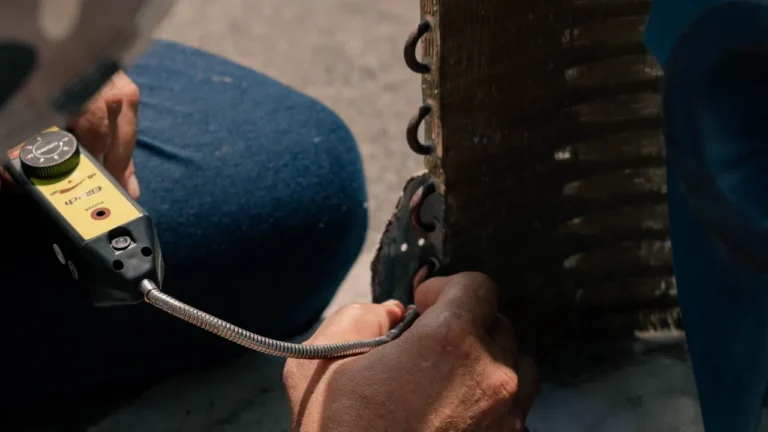
An AC does not use up refrigerant. If it is low, it is leaking. Adding refrigerant without finding the leak is a short-term fix you pay for again. Only technicians with EPA Section 608 certification may handle refrigerant. Ask what the leak search involves and what the repair options are. Very old systems may use R-22, which is no longer produced – see refrigerant changes.
When to stop and call
- A breaker that trips again after one reset.
- The outdoor unit hums but does not start, or makes grinding, banging or screeching noises.
- Ice that returns after a filter change.
- Water leaking onto ceilings or floors.
- A burning smell – turn the system off; if smoke appears, leave and call 911.
- No cooling in dangerous heat with babies, older adults or anyone unwell at home: call a company that takes emergency calls and go somewhere cool meanwhile.
Find an HVAC company near you
Local heating and cooling companies by metro area, listed A to Z with phone numbers, services and emergency options.
Questions
Why is my AC running but not cooling the house?
The most common causes are a dirty filter, a dirty outdoor coil, an outdoor fan or capacitor that has failed, ice on the coil, or low refrigerant from a leak. Check the filter, thermostat, breakers and outdoor unit first.
Why is my AC blowing warm air?
Check that the thermostat is on Cool and the fan is on Auto. If the indoor fan runs but the outdoor unit does not, check the outdoor breaker and disconnect. If the outdoor unit hums without starting, call a technician.
Is it safe to keep running a frozen AC?
No. Turn cooling off and let it thaw with the fan on. Running it frozen can damage the compressor, the most expensive part of the system.
How often should I change the AC filter?
Check it monthly in heavy-use months. Common one-inch filters usually need replacing every one to three months; thicker media filters last longer. Follow the filter and system maker’s guidance.
Related guides
Updated October 2026 by the Heating and Cooling editorial team. General information for homeowners, not professional advice – rules and equipment differ. When gas, carbon monoxide, electricity or anyone’s safety is involved, call 911 or your utility. How we write our guides · HVAC glossary