The short answer
Heat pump air feels warm, not hot – cooler than a furnace – and that is normal. A few minutes of cool air during a defrost cycle is normal too. Check the thermostat is on Heat with the fan on Auto, and replace a dirty filter. Cold air that lasts, an outdoor unit buried in ice, or cold air even on emergency heat means call a technician.
Lukewarm is not the same as cold
A gas furnace heats air with a flame, so its vents blow hot air in short bursts. A heat pump moves heat from outdoors and delivers it at a lower temperature over longer run times. Air from the vents is warmer than the room but often cooler than your hand, so it can feel like a draft. If the house holds the temperature you set, the heat pump is doing its job.
It is also normal for the system to run for long stretches on cold days. New to heat pumps? Start with our heat pump guide.
Defrost: a few minutes of cool air
In cold, damp weather, frost builds on the outdoor coil. The U.S. Department of Energy (DOE) explains that a valve near the compressor – the reversing valve – can change the direction of refrigerant flow, both for cooling and for defrosting the outdoor coil in winter. During a defrost cycle the system briefly works like an air conditioner to warm the outdoor coil, so the indoor air can turn cool for a few minutes unless backup heat covers it.
Signs it is defrost: the outdoor fan stops, you hear a whoosh, and steam rises from the unit. Normal heating returns on its own. The DOE also notes that high winds on the outdoor unit can cause defrost problems.
Check the thermostat
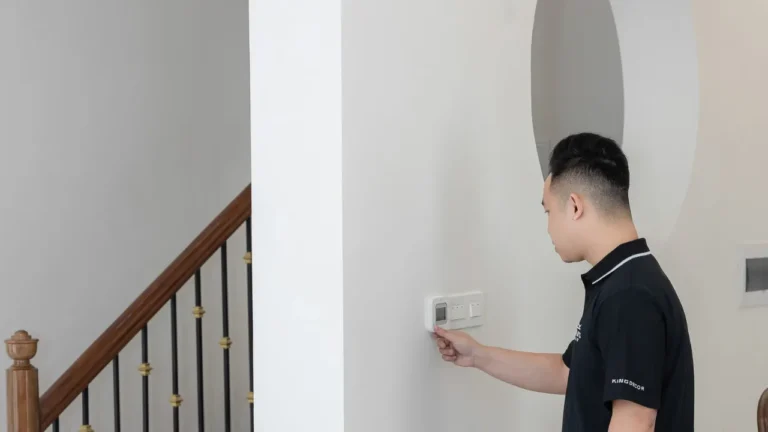
- Mode: set to Heat, a few degrees above room temperature. On Cool or Auto with a low setting, the system may be cooling.
- Fan: set to Auto. On “On”, the indoor fan runs between heating cycles and blows unheated air.
- Schedules: make sure a schedule, “away” mode or eco setting is not holding a lower temperature.
- New thermostat? If cold air started right after a thermostat was replaced, the setting that tells it how to switch the heat pump between heating and cooling may be wrong. Ask the installer to check it against the heat pump’s wiring. See thermostat settings.
Auxiliary and emergency heat
Most ducted heat pumps have backup heat: electric heat strips or, in a dual-fuel system, a furnace. Auxiliary heat comes on by itself when the heat pump needs help, such as during defrost or very cold weather. Emergency heat is a setting you choose that runs backup heat only.
- If the heat pump blows cold but emergency heat warms the house, the heat pump side has a problem. Leave it on emergency heat and call.
- If it blows cold even on emergency heat, the backup heat or its breaker may be off or failed. Check the breakers for the indoor unit, then call.
Emergency heat usually costs more to run. The DOE also advises against manually setting back a heat pump’s thermostat if that brings on the electric-resistance heat.
Filter and airflow
A clogged filter cuts airflow, which lowers heating output and can make the system overheat or shut down. ENERGY STAR advises inspecting, cleaning or changing filters once a month in central air conditioners, furnaces and heat pumps. Also make sure supply vents are open and nothing covers the return grilles. Our air filter guide has the details.
An outdoor unit covered in ice
A light coat of frost that clears during defrost is normal. A unit encased in ice, or a solid cap of ice on the top and fan, cannot move heat. Clear snow away with a broom, keep gutters from dripping on it, and never chip ice off with a tool – the coil is easy to puncture. If the ice stays after defrost cycles, switch to emergency heat and call. Our heat pump maintenance guide covers winter care.
Low refrigerant means a leak
A heat pump does not use up its refrigerant. If the charge is low, there is a leak. The DOE says too much or too little refrigerant reduces heat pump performance and efficiency, and that systems should be leak-checked at installation and at each service call. A system that is short of refrigerant may blow lukewarm-to-cool air, ice up, or run without keeping up.
Only technicians with EPA Section 608 certification may handle refrigerant. Ask where the leak is and how it will be repaired, not just for a recharge.
A stuck reversing valve or other fault
If the heat pump blows cold in heat mode and also warms the house in cool mode, the reversing valve or its control may be stuck. Other causes include a failed outdoor fan, compressor, capacitor or defrost control. These are technician repairs – capacitors hold a dangerous charge even with the power off.
When to call a technician
- Cold air that lasts well beyond a few minutes of defrost.
- Cold air in heat mode and warm air in cool mode.
- Ice that does not clear, or an outdoor fan that will not spin.
- The outdoor unit hums, buzzes loudly or trips its breaker.
- No heat even on emergency heat.
- No heat in freezing weather with babies, older adults or anyone unwell at home – see the emergency guide and how to prevent frozen pipes while you wait.
Sources
- U.S. Department of Energy, Energy Saver: Air-Source Heat Pumps (checked October 2026)
- U.S. Department of Energy: Energy Savers guide (2011, PDF) (checked October 2026)
- ENERGY STAR: HVAC Maintenance Checklist (checked October 2026)
Find an HVAC company near you
Local heating and cooling companies by metro area, listed A to Z with phone numbers, services and emergency options.
Questions
Why is my heat pump blowing cold air in heat mode?
Often it is normal: heat pump air feels cooler than furnace air, and the system blows cool air briefly during defrost. Check the thermostat is on Heat with the fan on Auto and replace a dirty filter. If cold air lasts, the cause may be ice, low refrigerant from a leak, a stuck reversing valve or failed backup heat.
Is it normal for a heat pump to blow cool air during defrost?
Yes. During defrost the system briefly reverses to warm the outdoor coil, so indoor air can feel cool for a few minutes unless backup heat covers it. Steam from the outdoor unit and a whoosh sound are part of the same cycle.
Should I switch my heat pump to emergency heat?
Only if the heat pump itself has failed or is iced over. Emergency heat runs backup heat alone and usually costs more. The system brings on auxiliary heat by itself when it needs help.
Why does my heat pump feel cold even though the house is warm?
Heat pumps deliver air at a lower temperature than furnaces over longer cycles. Air that feels cool on your hand can still be warming the house. If the thermostat setting is reached, the system is working.
Related guides
Updated October 2026 by the Heating and Cooling editorial team. General information for homeowners, not professional advice – rules and equipment differ. When gas, carbon monoxide, electricity or anyone’s safety is involved, call 911 or your utility. How we write our guides · HVAC glossary